In this guide · 7 parts
- 01What is the best breaststroke technique?
- 02What type of kicking technique is used in the breaststroke?
- 03How long should you glide, and what is the right timing?
- 04How do you swim breaststroke faster: more strokes or longer ones?
- 05How wide should the pull be, and how high should you breathe?
- 06What are the most common breaststroke mistakes?
- 07What are the downsides of breaststroke?
- QQuestions swimmers ask
- ●Sources
What is the best breaststroke technique?
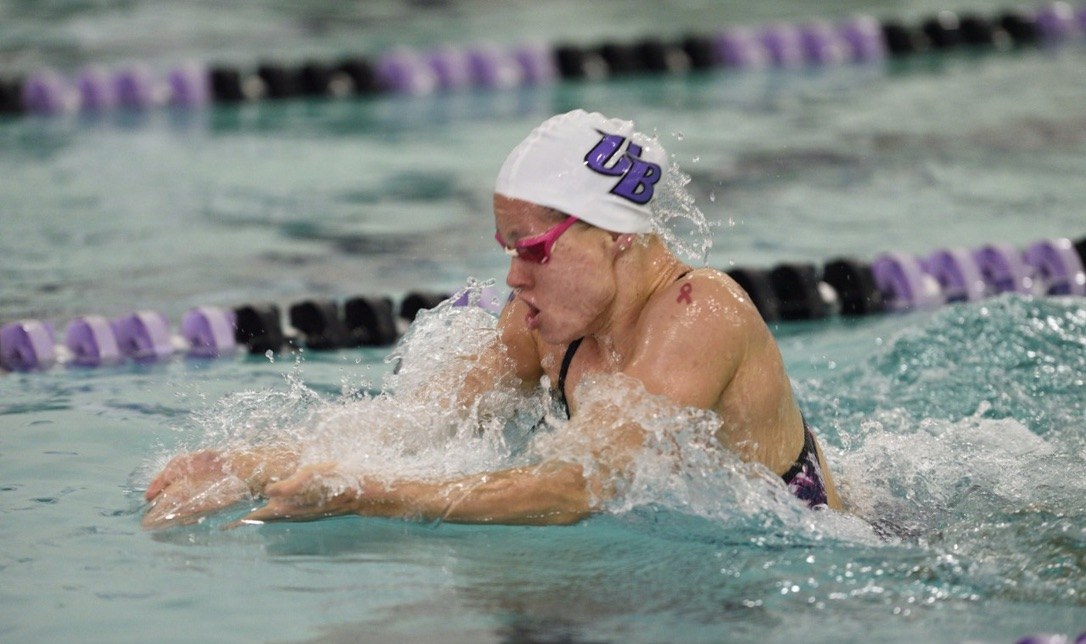
The best breaststroke technique keeps your arms and legs taking turns: pull, breathe, kick, then glide in a tight streamline. You start the next pull before you slow down, so you carry speed from one stroke into the next.
The research supports that order. Elite breaststrokers keep the arm and leg actions continuous and rarely pull and kick at the same time. They also lose less speed inside each stroke Leblanc 2005Takagi 2004.
One stroke cycle, step by step
- Start in streamline: arms squeezed to your ears, one hand stacked on the other, eyes down.
- Press the hands out, then sweep them in under your chin. Keep the elbows high and the hands in front of your shoulders.
- Let the pull lift your mouth clear and take your breath. Keep the chin low and the chest leaning forward.
- Shoot the hands forward with no pause at the chest. As they go, bring your heels up toward your hips.
- Flex your feet and turn them out, then push back and snap them together as the arms reach full stretch.
- Ride the kick in streamline. Start the next pull before you slow down.
Breaststroke is my stroke. I set the deaf world record in the 50 m breaststroke. I fix the stroke in one order: kick first, then glide, then pull, then rhythm.
No study has tested that order, so treat it as my method. I put the kick first because it drives the glide. A weak kick spoils every part that comes after it.
The free Breaststroke Drill Progression gives you seven drills that build the stroke kick first. Each drill comes with a cue and the fault to watch for.
What type of kicking technique is used in the breaststroke?
Breaststroke uses a whip kick. Both legs move together. The heels come up toward your hips, the feet flex and turn out, then the feet drive back and snap together.
Push with your feet, not your knees. The soles and the inside of your feet catch the water, so your ankles need to flex (toes toward your shins) and turn out.
How to do the whip kick
- Start with the legs long, straight and together.
- Draw the heels toward your hips. Keep the knees under the water and about hip-width apart.
- Flex the feet and turn them out at the top of the recovery.
- Drive the feet back and around, then snap them together.
- Finish with straight legs and pointed toes, and hold the streamline.
My cue is heels to hips, not knees to chest. Pull the knees under your belly and your hips sink, which adds drag and takes the whip out of the kick. Let the knees drop and spread, and the kick pushes water down and to the side instead of back.
The studies behind this guide do not test knee width, so that rule is coaching judgment. The research does name one kick fault: slower swimmers keep the knees bent in the glide Leblanc 2009Nicol 2022. Straighten and squeeze the legs together at the end of every kick.
Three ways to check your kick
- Kick on your back with your hands at your sides. You can watch your knees, and they should stay under the water.
- Kick on your back with a kickboard across your thighs. If the board lifts, your knees are coming up toward your chest.
- Kick upright in deep water with your arms crossed on your chest. A lopsided or scissor kick sinks you fast.
Tight calves limit how far your feet can flex, and then the kick slips. Ankle work on dry land builds range you can use in the water.
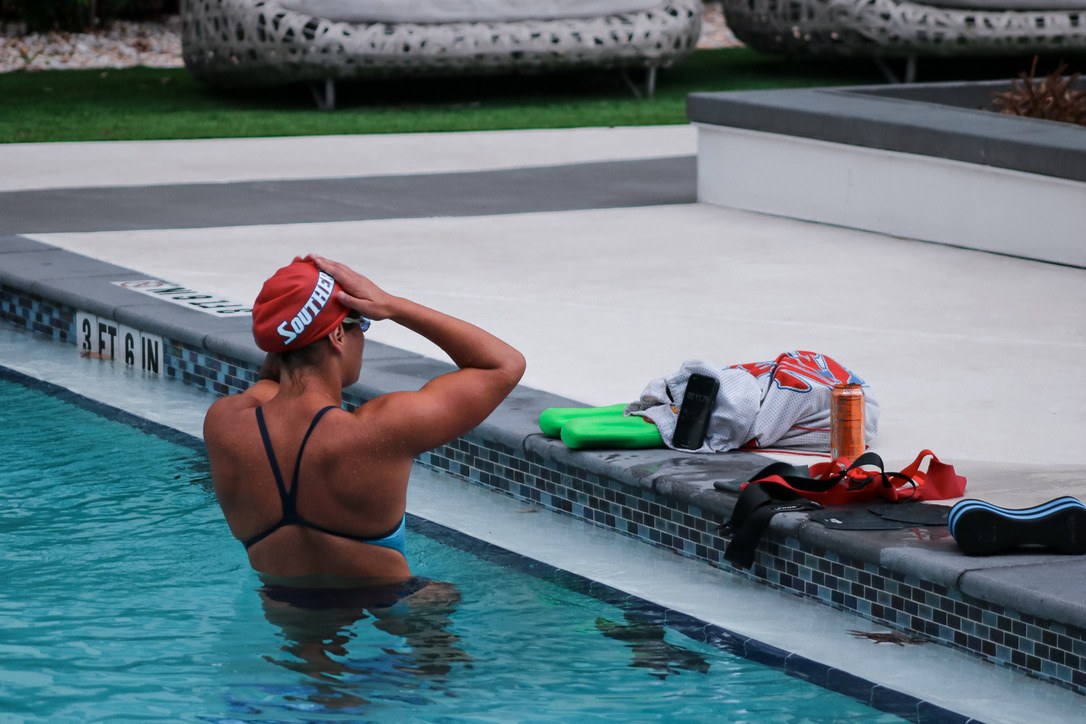 Video for every drill
FreeGoes with this article
Breaststroke Drill Progression
Seven drills in order, kick first.
- Streamline push-offs
- Whip kick on back
- Kick on front with a board
+ 4 more drills
- 7 drills
- Video for each
- Free
The first drill is open. Your name and email open the rest, once, for every free guide on the site.
How long should you glide, and what is the right timing?
Glide long enough to ride the speed from your kick, then start the pull before you slow down. The faster the race, the shorter the glide.
Elite breaststrokers glide less than slower swimmers. In Leblanc 2005, the glide took up this share of each stroke cycle:
- Elite
- Non-elite
Men
Women
See the numbers
| Swimmers | Elite | Non-elite |
|---|---|---|
| Men | 11.9% | 19.6% |
| Women | 18.8% | 31.0% |
The glide also shrinks as the race distance gets shorter. At the other end of the scale, many recreational swimmers in these studies had no glide at all Leblanc 2009Nicol 2022.
The right glide depends on you. If you rush, you need more glide. If you sit in a long glide at 50 pace, you need less.
Ride each kick, then pull before you slow
I teach one rule for the glide. Ride each kick in a tight streamline with your arms squeezed to your ears, and start the pull before you lose speed.
This rule fixes the swimmer who rushes into the next pull and throws away the speed the kick gave them. You know you rush if your stroke count is high and your breaststroke feels busy.
How long to glide in each race
The studies report the glide as a share of the stroke cycle, so I don't give you a number of seconds to hold. My advice by event is coaching judgment, built on the research above:
- In drills, hold a full glide. Kick-with-board drills use a 2 to 3 second pause between kicks to build patience.
- At 200 pace, keep a clear glide after each kick.
- At 100 and 50 pace, shorten the glide and start the next pull earlier.
Test it on video. Film a 25 (yards or metres) from the side at 200 pace, then at 50 pace. The glide should look shorter at 50 pace, with no dead stop in either swim.
The right timing
Arms and legs take turns. Pull and breathe with the legs long, and bring the heels up as the hands shoot forward. Push back with the feet as the arms reach full stretch.
My cue for this is "kick your hands forward." The kick should feel like it launches your hands into the streamline.
Slower swimmers push back with the feet while the arms are still recovering Leblanc 2009. The opposite fault is starting the pull before the kick has finished. In both cases one end of your body brakes while the other end pushes.
At sprint pace, competitive swimmers do overlap the pull and kick a little Takagi 2004. My advice is to learn the clean version first, and that part is coaching judgment.
How do you swim breaststroke faster: more strokes or longer ones?
Work on distance per stroke first, then add stroke rate. Elite breaststrokers travel further on each stroke, but no single stroke rate suits everyone, so you need to find your own mix.
Leblanc 2005 measured distance per stroke in elite and non-elite swimmers:
- Elite
- Non-elite
Women
Men
See the numbers
| Swimmers | Elite | Non-elite |
|---|---|---|
| Women | 2.05 m (2.24 yd) | 1.73 m (1.89 yd) |
| Men | 2.03 m (2.22 yd) | 1.82 m (1.99 yd) |
Across groups, the links between stroke length, stroke rate and speed are weak. The best mix differs from one swimmer to the next Takagi 2004Nicol 2022.
I use distance per stroke as a main marker of a good breaststroke. You can lift your rate at race pace. A long stroke is much harder to win back once you lose it in a race.
Find your own mix
- Swim an easy 25 and count your strokes. Use the same pool each time, because a 25 yd pool and a 25 m pool give different counts.
- Swim more 25s and try to take one or two fewer strokes per length at the same speed.
- Swim 50s at 200 race pace and hold the stroke count from your easy swims.
- Time a 50 from a push. If your count drops and your time holds or improves, the change works for you.
Watch your count when you get tired. A count that creeps up late in a set tells you the glide is shortening and the stroke is starting to break down.
How wide should the pull be, and how high should you breathe?
Keep the pull in front of you, with the hands never passing the line of your shoulders. Breathe as the pull lifts you, only until your mouth clears, with your chest leaning forward.
The pull
I teach the pull inside an imagined cube in front of you: not too wide, not too short. Press the hands out, then sweep them in under your chin with the elbows high. Shoot the hands forward with no pause at the chest.
A pull that goes too wide shows up as rocking side to side. No study has tested pull width, so the cube is my method and my coaching judgment.
Your fingertips have dense touch receptors and your forearms have few. You end up pulling with your hands, and your arms slide through the water. Swim breaststroke with your hands closed into fists, and your forearms have to find the water.
Fist drills are my method; no study in this guide tests them. Sculling builds the same feel with small sweeps out and in, elbows near the surface. Feel the pressure build on your palms.
The breath
The breath comes from the pull. Lift only until your mouth clears, then drive forward with your chest. Your hips drive a slight undulation, not a big bounce.
The research leans the same way. The Nicol 2022 review links smaller up-and-down acceleration in the kick and glide with faster 50 m times (r = 0.84, a strong link).
That review does not test undulation from the hips, so that part is coaching judgment. It does name a fault: slower swimmers keep the elbows bent in the glide Leblanc 2009Nicol 2022. Reach to full stretch with your arms squeezed to your ears.
What are the most common breaststroke mistakes?
The most common mistakes are a wide kick with dropped knees, no glide, a slipping or wide pull, and a big lift to breathe. Read the seven lines below and mark the ones that sound like you.
Tap the ones that sound like you.
My kick feels big but moves me little.
- What is going wrong
- Your knees drop and go wide, so the kick pushes water down and sideways.
- Try first
- Kick on your back. Keep the knees under the water and bring the heels to your hips.
I barely move on a breaststroke kick set, or one leg does less work.
- What is going wrong
- Your feet don't turn out and snap, or one leg kicks less than the other.
- Try first
- Kick one leg at a time and match the weaker leg to the stronger one.
My stroke count is high and my breaststroke feels busy.
- What is going wrong
- You rush into the next pull and lose the glide.
- Try first
- One pull, then two or three kicks in streamline. Each kick goes further than the last.
Paddles make a big difference to my pull.
- What is going wrong
- Your hands and forearms don't hold the water, so the pull slips.
- Try first
- Scull to feel the pressure before you add force.
I rely on my kick for all my speed.
- What is going wrong
- Your arms slide through the water.
- Try first
- Swim breaststroke on your fists.
I rock side to side on each stroke.
- What is going wrong
- Your pull goes too wide.
- Try first
- Keep the hands inside the cube, in front of your shoulders.
I feel a stall each time I breathe.
- What is going wrong
- You swim flat, or you lift too high to breathe.
- Try first
- Lift until your mouth clears, chest forward, with a slight undulation from the hips.
The research names two more faults of slower swimmers. They kick while the arms are still recovering, and they bend the elbows and knees in the glide Leblanc 2009Nicol 2022.
No study tests wide knees, wide pulls or rocking. Those three lines come from my coaching.
You can't see most of these faults from inside your own stroke. Film one length from the side at 200 pace, then check your knees, your glide and the height of your breath.
These seven lines are the 2-minute self-check in my course, Fix Your Breaststroke. Your answers mark two focus weeks in a 7-week plan that fixes the kick, the glide, the pull and the rhythm in that order. You take the same test in week 1 and week 7: strokes per 25, a 50 from a push and one filmed length.
What are the downsides of breaststroke?
Breaststroke stops and starts inside every stroke, so small timing errors cost you speed. The kick also needs ankle and hip range, and many of its faults are hard to feel without video.
Your hands and your knees both travel forward through the water during the recovery. Slow hands act like a brake, and knees pulled toward your chest add drag at the front of your body.
Your speed rises with each pull and kick and drops in between. Elite swimmers keep those swings smaller Leblanc 2005Takagi 2004. In my coaching, clean timing and a streamline you can hold are the tools for that.
The whip kick is not a natural movement, so you have to build it on purpose. Tight calves stop your feet from flexing, and the kick slips. Weak hip control lets your hips sag when you kick in streamline.
Your own faults also hide from you. Swimmers who kick on their back for the first time often see their knees travel wider and higher than they thought.
Check one fault at a time on video, and start with the kick. More free drill guides are on the resources page.
Questions swimmers ask
What is the best breaststroke technique?
Pull, breathe, kick, then glide, with your arms and legs taking turns. Keep the pull in front of your shoulders and lift only until your mouth clears.
Bring your heels to your hips with the knees under the water, then push back with your feet. Ride the kick in a tight streamline and start the next pull before you slow. Elite swimmers keep these actions continuous and glide less at sprint pace.
What type of kicking technique is used in the breaststroke?
Breaststroke uses the whip kick, also called the breaststroke kick. Both legs move at the same time.
Your heels come up toward your hips, your knees stay under the water and about hip-width apart, and your feet flex and turn out. Then your feet drive back and snap together. Finish with straight legs and hold the streamline before the next pull.
What are the downsides of breaststroke?
Breaststroke stops and starts inside every stroke, so a timing error costs you speed on each cycle.
The whip kick needs ankles that flex and turn out, and hips that stay level while you kick. Faults like wide knees or a wide pull are hard to feel in the water, so you need video to find them.
What is the hardest swimming style?
The research in this guide does not rank the four strokes by difficulty. As a breaststroke coach, I'd point to breaststroke timing.
The whip kick is not a natural movement, and a pull or kick at the wrong moment brakes you on every stroke. The 50 breaststroke, my own race, leaves nowhere to hide a flaw.
The next step
Fix Your Breaststroke
The breaststroke course: 25 video lessons in fixing order, a 7-week plan of 21 practices, and a test in week 1 and week 7.
See Fix Your BreaststrokeSources
- Leblanc et al. 2005, arm and leg coordination in elite and non-elite breaststroke swimmers, PubMedPubMed
- Leblanc et al. 2009, breaststroke coordination compared in two groups of 12 swimmers, PubMedPubMed
- Takagi et al. 2004, breaststroke stroke phases and timing at the 2001 World Championships, PubMedPubMed
- Nicol et al. 2022, review of 38 studies on breaststroke technique, PubMedPubMed